

Digital vs. Flexo
Flexo vs Digital Inkjet Printing: Which Is Better for Your Operation?
Choosing between flexo and digital inkjet printing is not just a question of print quality. It is a question of flexibility, setup time, job type, and how often your printed information needs to change.
Flexo printing has been used for decades across labels, packaging, film, corrugated, folding cartons, and other production environments. It is fast, reliable, and still useful for long runs where the same artwork is printed over and over.
But modern print requirements have changed. More companies need shorter runs, more SKUs, faster turnarounds, regional versions, serialized codes, QR codes, barcodes, addresses, expiration dates, and other variable data. That is where digital inkjet printing has a major advantage.
Digital inkjet gives operations the ability to print directly from digital files without relying on new plates for every change. For companies comparing flexo and digital inkjet before making a purchase, that flexibility can make inkjet the smarter long-term investment.
What Is Flexo Printing?
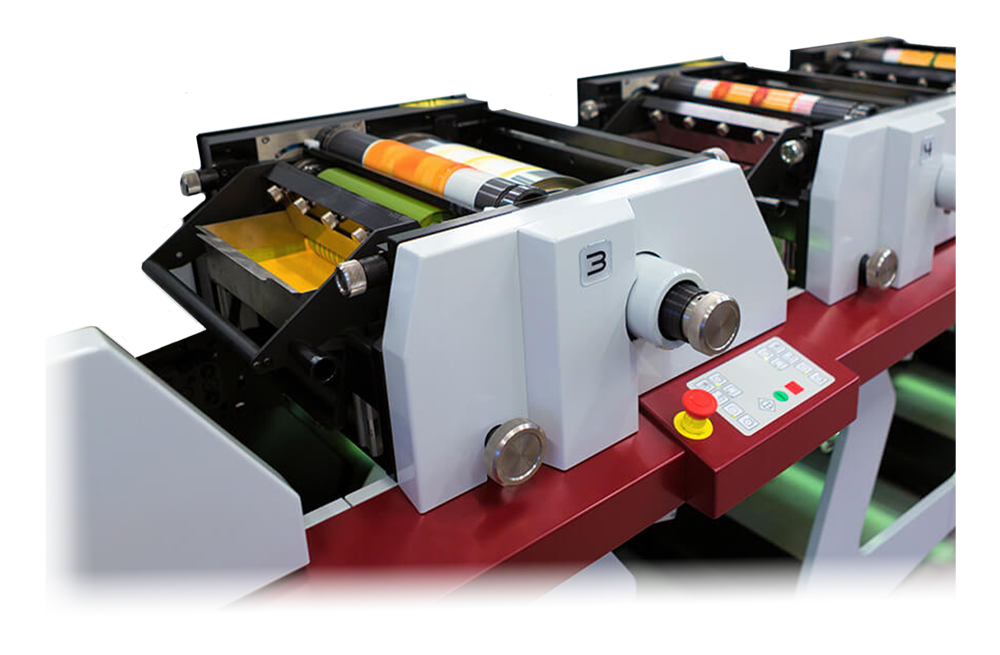
Flexographic printing, often called flexo, is a traditional printing method that uses flexible printing plates mounted on rotating cylinders. Ink is transferred from the plate to the substrate as material moves through the press.
Flexo is commonly used for high-volume packaging, labels, films, cartons, bags, and other roll-fed or web-based materials. Its biggest strength is repeatability. Once the job is set up, flexo can produce large volumes of the same print efficiently.
The drawback is that flexo depends on setup. If the artwork changes, the job may require new plates, additional make-ready, press adjustments, and more downtime. That can become a problem when customers need shorter runs, multiple versions, or changing data.
What Is Digital Inkjet Printing?
Digital inkjet printing uses printheads to apply ink directly to the substrate from a digital file. Unlike flexo, it does not require physical printing plates for the printed image.
That difference matters. Because the print is controlled digitally, inkjet can handle changing text, numbers, codes, graphics, and other data far more easily than traditional plate-based printing.
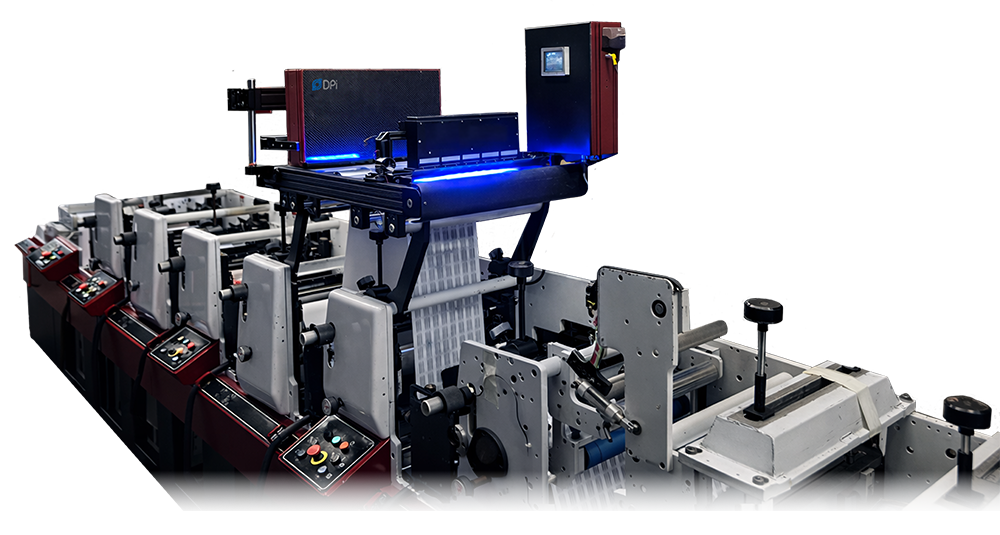
For production environments, digital inkjet can be used as a standalone printing method or added inline to existing equipment. That allows companies to keep their current production process while adding digital print capabilities where they need them most.
Flexo vs Digital Inkjet Printing: The Main Difference
The main difference between flexo and digital inkjet printing is how each method handles change.
Flexo is efficient when the job stays the same. Digital inkjet is efficient when the job changes.
If you are running the same artwork at high volume for a long period of time, flexo may still make sense. But if your operation needs to print different codes, addresses, product versions, regional variations, promotional graphics, or customer-specific information, digital inkjet is usually the better fit.
Why Digital Inkjet Wins for Variable Data
Variable data is one of the clearest reasons to choose digital inkjet over flexo.
With digital inkjet, each printed piece can include unique information. That can include:
Barcodes
QR codes
Serial numbers
Lot codes
Expiration dates
Addresses
Product IDs
Regional information
Promotional codes
Customer-specific graphics
SKU-specific details
Trying to manage this type of work through flexo alone can be inefficient. Flexo is built around repeat print. Digital inkjet is built around controlled variation.
For companies handling packaging, labels, mail, corrugated, paper bags, tickets, tags, or industrial coding, this is a major difference. Digital inkjet allows your print process to match the way your customers are actually ordering.
Setup Time: Where Flexo Starts to Fall Behind
Flexo’s biggest weakness is not that it cannot print well. Its weakness is that every change adds friction.
New artwork can mean new plates. New versions can mean more setup. Shorter runs can become less profitable because the setup time starts to outweigh the value of the job.
Digital inkjet removes much of that friction. Since the print is file-driven, operators can move from one version to another with far less mechanical changeover. This helps reduce downtime, reduce waste, and make smaller or more complex jobs easier to produce.
Short Runs and SKU Variation
The rise of SKU variation has made digital inkjet more valuable.
Many brands no longer want one massive run of identical packaging. They want smaller runs, more versions, seasonal changes, regional campaigns, private label variations, and faster updates.
Flexo can handle some of this, but it often becomes inefficient as the number of versions increases. Digital inkjet is a better fit because it allows more variation without rebuilding the entire print setup around every change.
If your operation is turning away short-run work, outsourcing variable print, or struggling with constant changeovers, digital inkjet can help bring that work back under your control.
Cost Comparison: Flexo vs Digital Inkjet
Flexo can still offer a low unit cost on very long repeat runs. That is one of the reasons it remains common in packaging production.
But unit cost is not the only cost that matters.
You also need to consider:
Plate costs
Setup time
Changeover labor
Make-ready waste
Obsolete inventory
Outsourced variable data work
Missed short-run opportunities
Delays caused by artwork or code changes
Digital inkjet can reduce or remove many of these costs. For operations dealing with frequent job changes, variable data, and shorter runs, the savings are often found in the workflow, not just the printed piece.
Print Quality: Flexo vs Digital Inkjet
Both flexo and digital inkjet can produce strong print quality when the right equipment, inks, substrates, and settings are used.
Flexo is still strong for large areas of static graphics and long repeat jobs. Digital inkjet is especially strong when sharp text, readable codes, variable information, and high-resolution digital output are needed.
The better question is not simply “Which one looks better?” The better question is “Which one gives us the print quality we need with the flexibility our jobs require?”
For many modern operations, that answer is digital inkjet.
When Flexo Still Makes Sense
Flexo is not dead, and it is not useless. It still makes sense in certain production environments.
Flexo may be the better option when:
The job is extremely long
The artwork does not change
The same design runs repeatedly
Plate costs are already absorbed
The operation is built around high-volume static production
But if your business is moving toward shorter runs, more SKUs, variable data, or faster turnaround, flexo by itself can become limiting.
When Digital Inkjet Is the Better Investment
Digital inkjet is usually the better investment when your operation needs more control, more flexibility, and less dependency on plate-based setup.
Digital inkjet is a strong fit when you need to print:
Barcodes
QR codes
Addresses
Serial numbers
Batch codes
Expiration dates
Product variations
Regional packaging
Versioned labels
Short-run jobs
Customer-specific data
Promotional print
Compliance information
It is also a strong fit when you are currently outsourcing variable data work and want to bring that margin back in-house.
Can Digital Inkjet Be Added to an Existing Flexo Line?
In many cases, yes. You do not always need to replace your current equipment to gain the benefits of digital inkjet.
Digital inkjet systems can often be added inline to existing production equipment, including presses, transport bases, rewinders, conveyors, mail tables, and packaging lines. This gives your operation the ability to keep the equipment that already works while adding digital capability where flexo falls short.
For many companies, this hybrid approach makes the most sense. Use existing equipment for what it does well, then use digital inkjet for the variable, versioned, or data-driven print that traditional flexo is not built to handle efficiently.
Flexo vs Digital Inkjet: Which Should You Choose?
Choose flexo if your work is long-run, static, and rarely changes.
Choose digital inkjet if your work involves short runs, fast turnarounds, variable data, barcodes, QR codes, serialization, addresses, multiple SKUs, or frequent artwork changes.
The more your print jobs change, the stronger the case for digital inkjet becomes.
For modern packaging, labeling, mailing, and industrial print environments, digital inkjet gives you something flexo cannot easily match: the ability to adapt.
Talk to DPi About Digital Inkjet Printing
If flexo is slowing down your ability to handle variable data, short runs, or versioned print, DPi can help you evaluate whether digital inkjet is the right next step.
Our systems are designed to help operations add digital inkjet capability to real production environments, often without replacing the equipment they already rely on.
Bring more work in-house. Reduce setup friction. Take control of variable data printing.
Talk to DPi about adding digital inkjet to your operation.