


RFID Printing & Integration Systems for Packaging and Supply Chain

Inline RFID Solutions for Corrugated, Labels, and Industrial Packaging Operations
RFID technology is transforming packaging, warehousing, and supply chain operations—providing hands-free inventory tracking, automated receiving, and real-time visibility across distribution networks. As manufacturers and retailers mandate RFID compliance, packaging converters, label printers, and corrugated operations face increasing pressure to integrate RFID capability into their production lines.
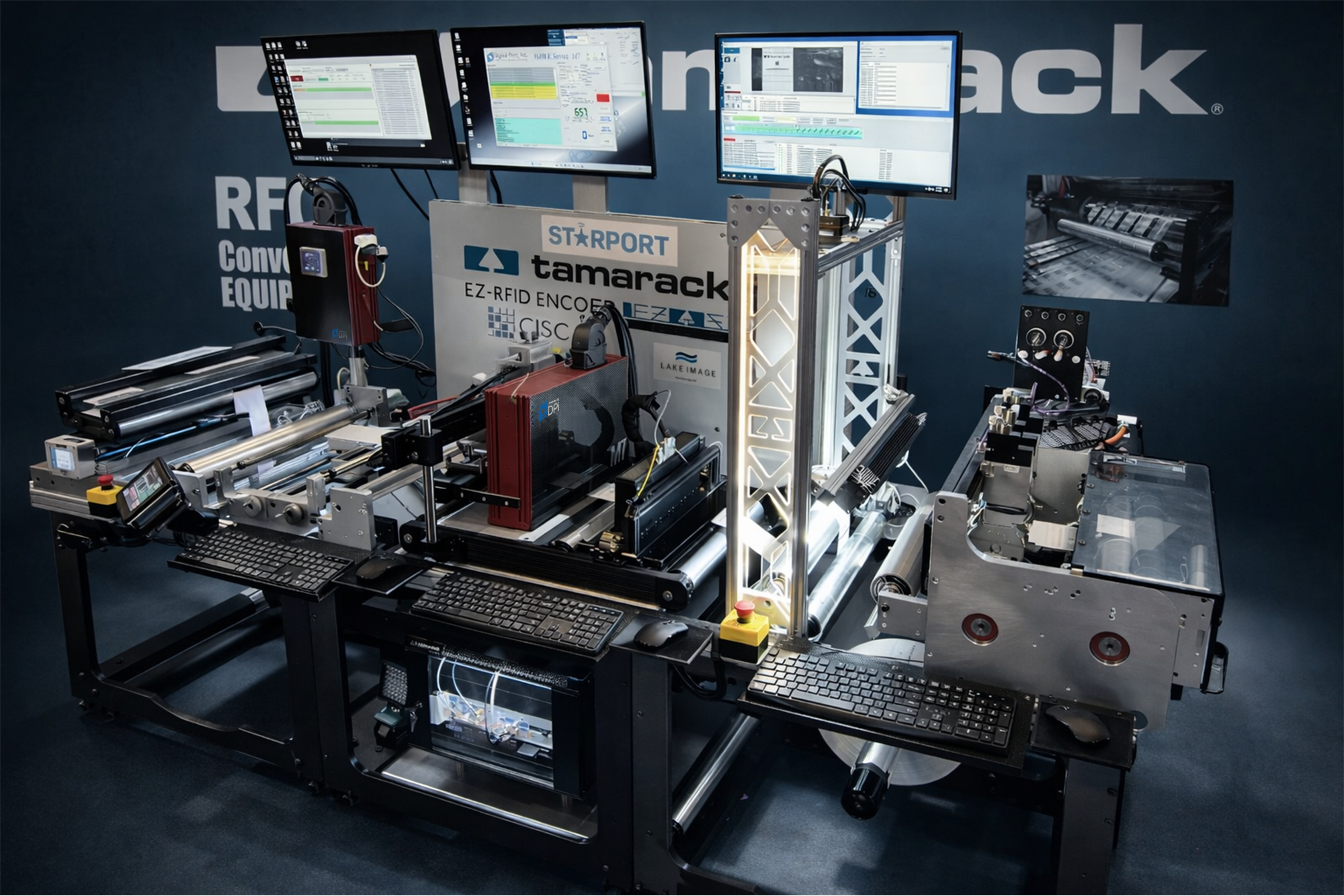
DPi designs and manufactures inline inkjet systems that work alongside RFID encoding equipment to print human-readable variable data, barcodes, and QR codes on RFID labels and packaging—combining the power of RFID with the visual identification that operations and compliance require. Our systems integrate with existing packaging lines, corrugators, and label converting equipment without replacing working production assets.
What is RFID Printing?
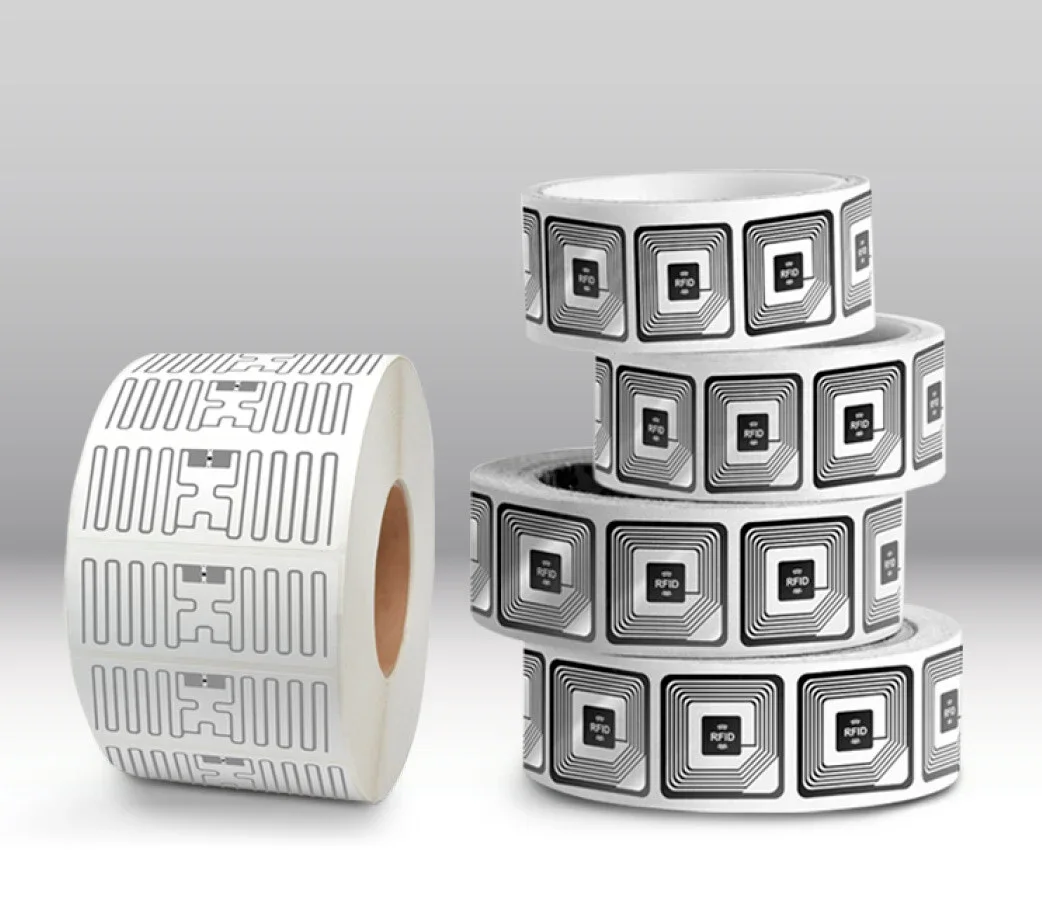
RFID (Radio Frequency Identification) printing combines two technologies in a single production step: encoding a unique digital identifier onto an RFID chip (the inlay) while simultaneously printing human-readable information, barcodes, and variable data on the label or packaging surface.
The Two Components of RFID Printing:
1. RFID Encoding An RFID encoder writes a unique Electronic Product Code (EPC) or other identifier to the chip embedded in the label or tag. This digital data is read wirelessly by RFID readers throughout the supply chain—at receiving docks, warehouse portals, conveyor tunnels, and point-of-sale.
2. Variable Data Printing (DPi's Role) Simultaneously, variable inkjet systems print the human-readable information that accompanies the RFID inlay—lot codes, serial numbers, barcodes, QR codes, expiration dates, and product information. This printed data serves as the visual backup to the digital RFID data, ensuring items remain identifiable even without RFID readers.
Why Both Matter: RFID alone isn't enough. Operations need human-readable data for manual verification, barcode scanning as a backup, and regulatory compliance. DPi's inline inkjet systems provide the variable data printing layer that makes RFID packaging complete.
RFID Applications in Packaging & Supply Chain
Retail Supply Chain Compliance
Major retailers including Walmart, Target, and Amazon now mandate RFID on inbound shipments. Packaging and label operations must integrate RFID encoding and printing to maintain compliance and avoid chargebacks.
DPi's Role: Our inline inkjet systems print human-readable data, shipping barcodes, and variable content alongside RFID-encoded labels—meeting retailer requirements for both RFID and printed barcode compliance in a single production pass.
Key Requirements:
GS1 EPC encoding standards
Human-readable product information
Backup barcode (GS1-128, ITF-14)
Serial shipping container codes (SSCC)
Variable lot and batch data



Smart Labels for Food & Beverage
RFID smart labels on food and beverage packaging enable automated inventory management, expiration date tracking, and recall management throughout the cold chain.
DPi's Role: Inline variable inkjet systems print expiration dates, lot codes, and QR codes alongside RFID-encoded smart labels—combining digital and visual identification for food safety compliance.
Applications:
Produce and fresh food traceability
Cold chain temperature monitoring
Expiration date compliance
Recall management and traceability
Retailer RFID mandates

Warehouse & Logistics Labels
RFID shipping labels on cartons, pallets, and containers streamline warehouse receiving, putaway, and shipment verification. Variable printed data provides the human-readable backup for manual operations.
DPi's Role: Print variable shipping data, routing barcodes, and destination information inline with RFID label encoding—producing complete smart shipping labels in a single pass.
Variable Data on RFID Shipping Labels:
Ship-to address and facility codes
GS1-128 shipping barcodes
SSCC pallet codes
Carrier routing information
Freight class and handling instructions

Corrugated Box RFID
RFID on corrugated shipping boxes enables automated receiving, inventory counting, and shipment verification throughout distribution networks. Boxes are scanned in bulk at receiving docks without manual barcode scanning.
DPi's Role: Our custom corrugated inkjet systems print variable data, lot codes, and barcodes inline with corrugating and converting equipment—complementing RFID encoding systems to deliver complete box identification.
Challenges We Help Solve: Corrugated environments present unique RFID challenges. Moisture absorption, metal interference, and pallet stacking all affect read performance. Our printed variable data provides a reliable visual backup when RFID reads are inconsistent—a critical redundancy in real-world production environments.
Variable Data Printed on RFID Corrugated:
Lot codes and batch numbers
Expiration dates
Destination and routing codes
QR codes for supply chain visibility
Human-readable serial numbers


Pharmaceutical Serialization & Track-and-Trace
FDA serialization requirements mandate unique identifiers on pharmaceutical packaging. RFID combined with variable data printing provides the dual-layer identification required for compliance.
DPi's Role: Our variable inkjet systems print human-readable serial numbers, 2D DataMatrix barcodes, and lot information alongside RFID encoding—meeting FDA DSCSA serialization requirements.
Compliance Requirements:
FDA Drug Supply Chain Security Act (DSCSA)
Unique Device Identification (UDI) for medical devices
Serialization at unit, case, and pallet levels
Human-readable and machine-readable formats


Why Variable Data Printing is Critical for RFID Operations
RFID alone doesn't replace printed identification—it supplements it. Here's why printed variable data remains essential in RFID-enabled packaging operations:
Human Verification
Warehouse staff, truck drivers, and receiving personnel can't read RFID data without a reader. Printed lot codes, serial numbers, and barcodes allow manual verification at every point in the supply chain.
Barcode Backup
RFID read rates in real-world environments rarely reach 100%. Printed barcodes provide a reliable fallback when RFID fails—critical for operations that can't afford missed scans.
Regulatory Compliance
Most compliance mandates (FDA DSCSA, GS1, retailer requirements) require both RFID and human-readable data. Printed content is not optional—it's required.
Environmental Resilience
In corrugated environments with moisture, metal, and stacking challenges, printed data remains readable even when RFID performance degrades. A barcode or lot code on the box face is always available regardless of RF conditions.
Customer Requirement
Many retailer mandates specify both RFID encoding AND printed barcode compliance. Operations must deliver both to avoid chargebacks and compliance failures.
Retail & Consumer Goods
Major retailer RFID compliance (Walmart, Target, Amazon mandates)
Apparel and footwear item-level RFID
Consumer electronics serialization
Promotional packaging campaigns
Logistics & 3PL
Automated warehouse management
Cross-dock operations
Pallet tracking and verification
Shipment accuracy improvement
Industries Implementing RFID with Variable Data Printing
Food & Beverage
Cold chain traceability
Expiration date management
Recall and withdrawal management
Retailer compliance mandates
Manufacturing
Work-in-process tracking
Finished goods serialization
Asset management
Quality control traceability
Pharmaceutical & Healthcare
FDA DSCSA serialization compliance
Medical device UDI requirements
Clinical trial labeling
Hospital supply chain management
Corrugated & Packaging
Retailer RFID compliance
Distribution center automation
Inventory management
Automated receiving systems
Frequently Asked Questions
What role does DPi play in RFID printing?
DPi manufactures the variable data inkjet systems that print human-readable information, barcodes, and QR codes alongside RFID-encoded inlays. We provide the printing layer that complements RFID encoding—ensuring every RFID label or package also carries complete printed identification.
Do DPi systems encode RFID chips?
Our inkjet systems handle the printing side of RFID label production. We integrate with RFID encoding stations from leading providers to create complete RFID printing solutions. Contact us to discuss integration options for your specific encoding equipment.
Why is printed variable data necessary if RFID is already encoded?
RFID read rates in real-world environments rarely reach 100%, particularly in corrugated operations with moisture, metal, and stacking challenges. Printed barcodes and human-readable data provide the fallback identification when RFID fails. Additionally, most compliance mandates require both RFID and printed data.
What substrates can DPi print on for RFID applications?
Our systems print on RFID label stock (paper, synthetic, foil-face), corrugated board (coated and uncoated), flexible films, and most packaging substrates. UV inks work on non-porous surfaces where water-based inks cannot.
Can DPi systems print GS1-compliant barcodes for RFID labels?
Yes. QPress software generates all GS1-standard barcodes including GS1-128, ITF-14, GS1 DataMatrix, and QR codes. Serial numbers and SSCC codes can be auto-generated from your EPC data.
How does moisture affect RFID in corrugated packaging?
Moisture in corrugated board and high-water-content products absorbs RF energy, reducing read rates. Research shows water-filled cases can have read rates 50% lower than dry products under identical conditions. DPi's UV inks maintain printed data integrity in humid conditions, providing reliable visual identification even when RFID performance degrades.
What's the best tag placement for corrugated RFID?
Place tags on the side or top of cartons, not the bottom. Keep tags away from direct metal contact. Stagger tag positions between adjacent cartons on pallets to reduce shadowing. Test under actual production conditions—not just lab specifications.
Can DPi systems handle the speeds required for inline RFID printing?
Yes. Our systems print variable data at speeds up to 1,200 FPM on corrugated lines and up to 1,000 FPM on label converting lines—matching or exceeding typical RFID encoding line speeds.
Do you offer barcode verification for RFID labels?
Yes. Our Code Reading System (CRS) verifies every printed barcode in real time, ensuring 100% readability before labels or packages leave production. In RFID operations, this is critical because the barcode serves as the fallback when RFID reads fail.
How does QPress software integrate with RFID systems?
QPress connects to databases, ERP systems, and WMS platforms to pull serial numbers, lot codes, and variable data for printing. It can receive data from RFID encoding systems and translate EPC codes into human-readable formats for simultaneous printing.
What RFID frequency standards do you support?
Our systems support printing and integration for UHF RFID (860-960 MHz, GS1 RAIN RFID standard), which is the dominant standard for supply chain and retail applications.
Where can I learn more about RFID challenges in corrugated environments?
Read our in-depth article: RFID in Corrugated Environments: Moisture, Metal, and Real-World Challenges. It covers moisture interference, metal detuning, pallet shadowing, and best practices for reliable reads in production environments.
Related Resources
Systems:
M7 Variable Web System - Label and flexible packaging integration
Variable Packaging Systems - Corrugated and flexible packaging
Code Reading Systems - Barcode verification for RFID
QPress Software - Variable data management
Industry Insights:
Get Started with RFID Variable Data Printing
Ready to add variable data capability to your packaging line? Whether you're a corrugated converter, flexible packaging operation, or folding carton manufacturer—DPi has a solution.
Next Steps:
Request Specifications: Get detailed system specs for your application
Schedule Consultation: Speak with our packaging integration engineers
Site Survey: We visit your facility to assess integration requirements
Custom Proposal: Receive engineered solution with pricing and timeline
Contact DPi Packaging Solutions:
📞 (817) 512-3151
📧 sales@digitalprint.com
📍 217 Performance Ln, Cresson, TX 76035