

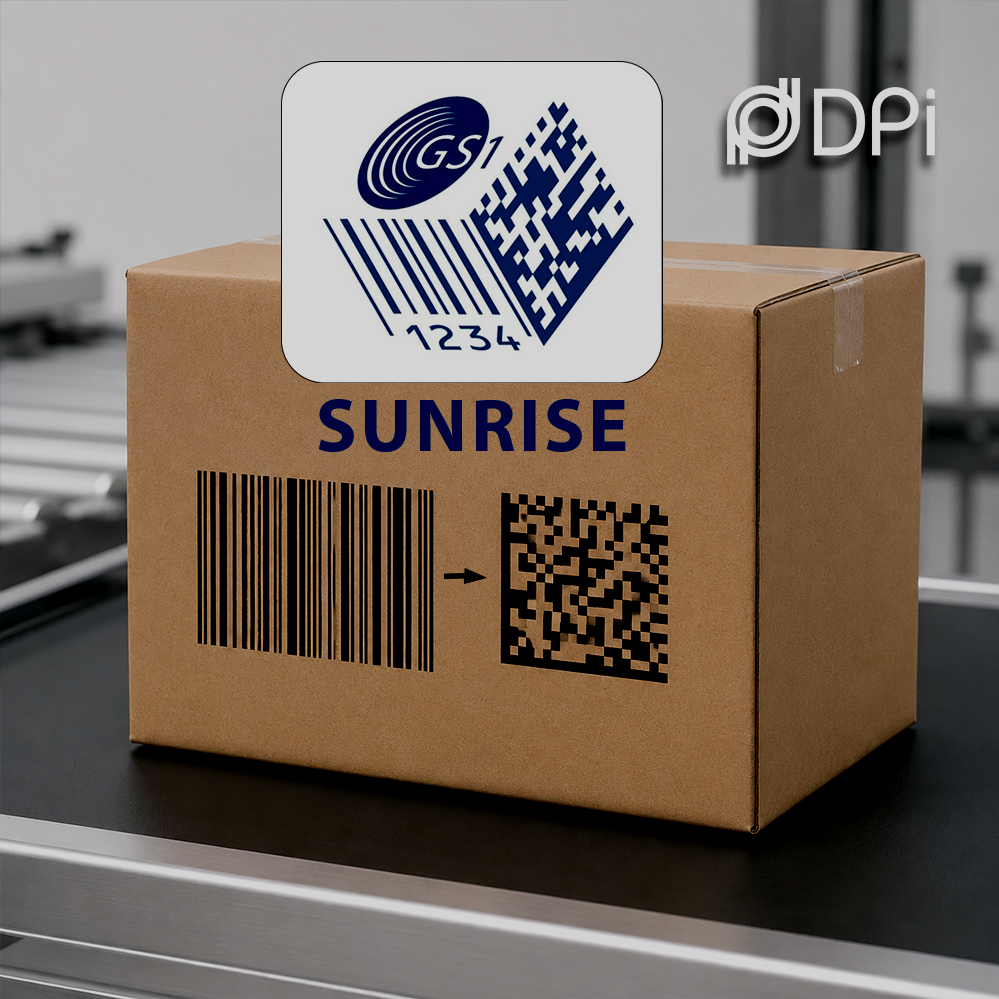
GS1 Sunrise 2027: What Manufacturers Need to Know
The barcode on product packaging is evolving. GS1 Sunrise 2027 is an industry effort to prepare retail checkout systems to read 2D barcodes, such as QR Codes and DataMatrix, alongside familiar UPC and EAN barcodes.
For manufacturers and packaging converters, the transition raises practical questions: Which codes may be used? What information can they carry? And what needs to happen on the production line to print them reliably?

What is Sunrise 2027?
Sunrise 2027 is the goal for retail point-of-sale systems to read and process the product identifier, or GTIN, from GS1-compliant 2D barcodes by the end of 2027. The goal is for checkout systems to handle both these newer codes and existing linear barcodes.
This is a transition, not a cutoff date for UPCs. Existing barcodes will continue to be used, and products may carry both a linear barcode and a 2D barcode while retailers update their systems.
What can a 2D barcode contain?
A traditional UPC or EAN barcode generally carries a GTIN. A 2D barcode can carry that product identifier along with additional information, depending on its format and how it is used.
GS1 Application Identifiers can identify data such as a batch or lot number, expiration date, or serial number. A QR Code using GS1 Digital Link can also connect a product identifier to online information, such as product details or instructions. ref.gs1.org
Common GS1-related 2D formats include:
QR Code using GS1 Digital Link
Data Matrix using GS1 Digital Link
GS1 DataMatrix using GS1 element string syntax
The right format depends on the use case, product, and requirements of retailers and trading partners.
What should manufacturers prepare for?
Adding a code to packaging involves more than generating an image. The data, code format, artwork, print process, and scanning workflow all need to work together.
Before production, manufacturers should:
Confirm which product identifiers and additional data the code needs to carry.
Coordinate with retailers and trading partners on acceptable formats and requirements.
Plan space and placement for the 2D code while accounting for any barcode that must remain during the transition.
Test the code on the actual packaging material and production line.
Verify printed codes and test how scanners and point-of-sale systems handle them.
A code can look sharp and still fail to scan. Print quality, contrast, placement, substrate, and symbol size all affect readability. GS1 recommends following its specifications and implementation guidance for code design and use. ref.gs1.org
The role of variable-data printing
Some information changes from one product or production run to another. Lot numbers, expiration dates, and serial numbers are common examples. Variable-data printing can add changing information and machine-readable codes inline during production.
The print setup needs to match the job. Code dimensions, print resolution, ink, substrate, line speed, and data handling all affect the finished result. Planning and testing those details before a full production run can help reduce unreadable codes and rework.
DPi builds inline inkjet products for variable-data printing on packaging and other materials. The right setup depends on the application, print surface, code requirements, and production line.
Frequently asked questions
Are UPC barcodes going away in 2027?
No. Sunrise 2027 is a goal for retail checkout systems to support GS1-compliant 2D codes alongside existing linear barcodes. The transition will take time. ref.gs1.org
Will any QR Code work at checkout?
No. A QR Code intended for checkout needs to use an appropriate GS1 format and contain the product identifier in a way the retailer’s system can process. A regular QR Code may link to a website but may not be suitable for point-of-sale scanning.
Does every product need a 2D barcode?
Requirements depend on the product, retailer, and use case. Manufacturers should coordinate with their trading partners and consult GS1 guidance before changing packaging or production workflows.
Plan your variable-data printing workflow
Preparing for Sunrise 2027 starts with understanding the data the code needs to carry and how it will be printed, verified, and scanned. If you are evaluating variable-data printing for your packaging or production line, DPi can help you discuss the application and equipment requirements.